How to Find Reliable Suppliers for Your UK Business: 10 Methods That Actually Work

If you want your business to be profitable and successful, you need to make sure the suppliers you use are competitive on price and give you an excellent, reliable service.
I think you need to build your business on a strong foundation, so choosing suppliers who can get you what you need, when you need it, is critical to giving your own customers the kind of service that keeps them coming back.
I'm going to break down a few good methods for finding decent suppliers. Some of them are a little unconventional, but I used every single one of these while running GoTo Workwear Ltd and Shelley's Waxmelts.
Here's what's coming up:
Watch what other sellers show you (even if they don't mean to)
1. Get Yourself to a Trade Show
This is the obvious one, but it works, and a lot of people do it wrong. They wander round like it's a day out instead of treating it like the working trip it actually is.
The NEC in Birmingham runs trade shows for pretty much every sector going, and a fair few are relevant whatever corner of the maker world you're in.

If you're in candles, wax melts, or general gift and home products, Autumn Fair is the big one to know — it's on 6–9 September 2026, pulls in well over 10,000 trade buyers and hundreds of exhibitors, and runs alongside Source Home & Gift under the same roof.
Spring Fair covers similar ground every February, so it's worth diarising for next time round, since this year's has already been and gone.

If you're in garment printing or workwear, Printwear & Promotion LIVE! is the dedicated show for decorated garments and promotional products, also at the NEC, also held every February, alongside Sign & Digital UK — again, one to pencil in for next year rather than this one.

A few things to note:
Register as a trade buyer before you go, not on the door. Most of these shows are free to get into if you register properly in advance with your business details. Turn up as a member of the public and you'll either get turned away or charged for the privilege.
The big-name stands aren't where the deals are. They're nice to look at, but it's the small independent suppliers tucked away in the corner stands who'll do you a proper trade price and won't blink at a smaller minimum order.
Take a proper stack of business cards and actually hand them out. If you haven't sorted yours yet, I built a free business card generator over in The Ops Room.
Follow up with a phone call or an email to the salesperson you spoke to on the day, within a couple of days of visiting, while you're still a face they remember rather than a name on a list.
2. Watch What Other Sellers Show You (Even If They Don't Mean To)
A lot of small business content online is basically free reconnaissance, if you know what you're looking for.
Watch workshop tour videos on your competitors social channels, keep your eyes on the background rather than just listening to what they're saying. Return address labels on boxes, supplier packaging left in shot, branded packing slips on the desk — sellers give this stuff away constantly without realising, because they're thinking about it as content, not as a security risk.
Here is an example of me finding a specific wax that my highly successful competetitor used for thier wax melts, nestled away in a you tube video on thier channel, if it;s good enough for them to build a huge business on the back of then it's worth me trying it out, I also used this tactic for finding specific packaging suppliers and reliable, competetive electric wax melt burner suppliers:

It's not just YouTube either. TikTok and Instagram Reels are full of exactly this kind of behind-the-scenes footage now, often more candid than YouTube because it's filmed quicker and edited less.
Two more things worth checking every time: the video description and the pinned comment. A lot of creators link their suppliers directly, sometimes as an affiliate link, which actually tells you something useful — it means they rate that supplier enough to put their name on it.
3. The Companies House Trick Most People Don't Know About
This is the one that surprises people when I mention it, and it's completely free.
When a company goes into administration, liquidation, or a CVA, whoever's handling the insolvency has to file something called a Statement of Affairs. It's a legal requirement, has to be done within 14 days, and it gets registered at Companies House, where anyone can view it. It lists out the company's assets, what it owes, and — this is the bit that matters to you — a full list of its creditors and how much each one is owed. This is excellent information to allow you to see a list of your competetiors suppliers, you should research each one still, but it's an excellent starting point for anyone looking to improve or grow thier own supply chain. You could stumble accross a little known international suplier, saving you months of research and testing
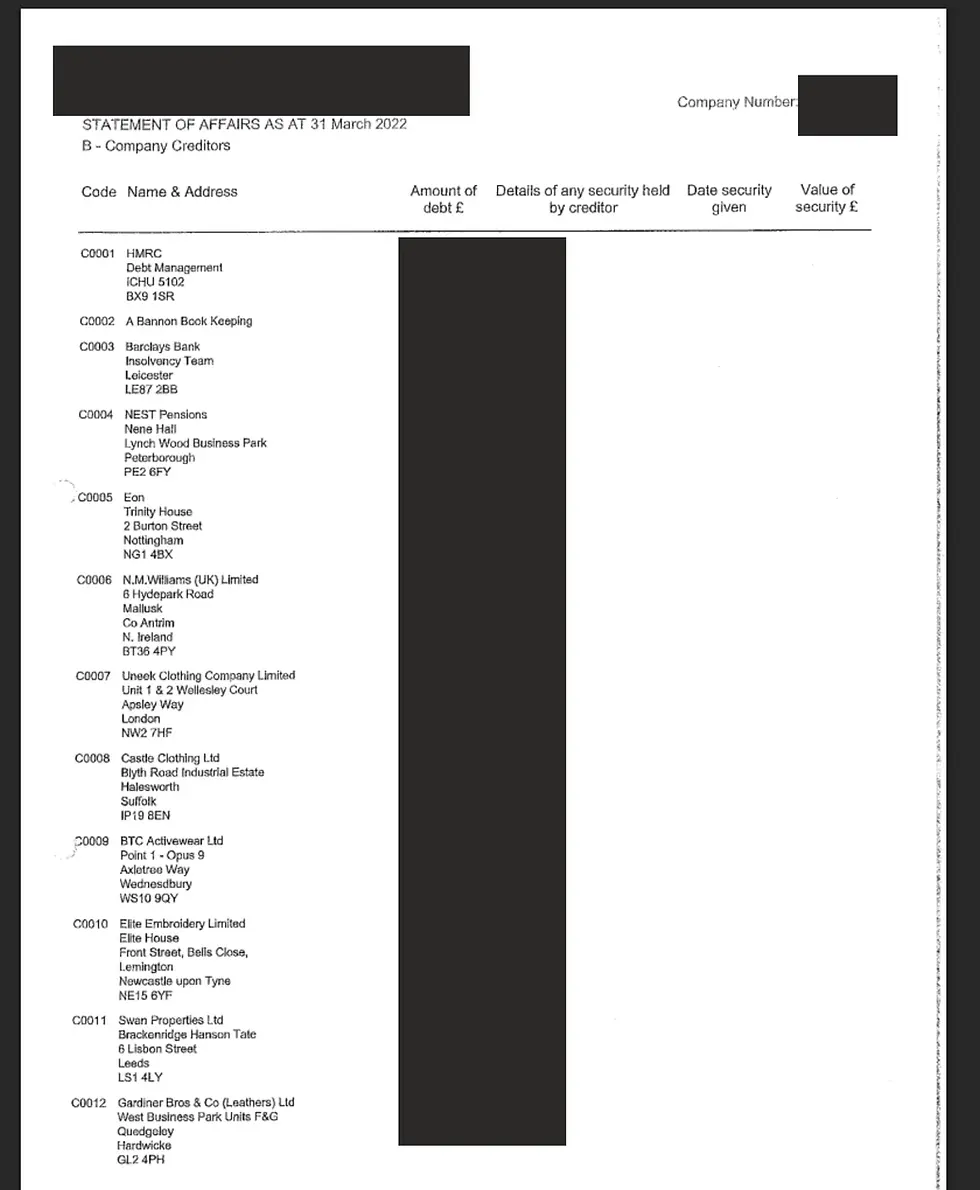
Here's why that's useful. If a business in your niche goes under, whether that's a direct competitor or just someone trading in roughly the same space, that creditor list is effectively a vetted supplier list. These are companies that extended credit to a business doing what you do, which tells you two things straight away: they serve your kind of trade, and they trusted that business enough to let them buy on account.
How to actually do it:
Search the company name on the Companies House "Find and update company information" service.
Open the filing history tab.
Look for anything insolvency-related — Statement of Affairs, administrator's proposals, that sort of thing.
Download it. No charge, no account needed.
Worth doing while you're in there: click "Follow this company" on any business you're keeping an eye on, and Companies House will email you the moment anything new gets filed against their record, so you're not relying on remembering to check back.
Also worth knowing: The Gazette is the official public record for UK insolvency notices, and it's worth a look if you want to catch this kind of thing as it happens rather than after the fact.
And there's a flip side worth a mention. When it's a supplier that's gone under rather than a competitor, their remaining stock often gets sold off through the insolvency practitioner or an asset auction house, sometimes well below normal price. Worth keeping half an eye out if a name in your industry you recognise ever turns up in this position.
4. Search Like You Mean It
"Just Google it" isn't really advice, so here's what I actually search for.
"[material] wholesale UK" + filetype:pdf — this surfaces trade price lists and catalogues that often aren't linked anywhere from a supplier's actual website, just sitting there waiting to be found.
![Google search results in dark mode for [workwear] wholesale UK + filetype:pdf, showing PDF results about workwear suppliers.](https://static.wixstatic.com/media/6fe694_2d16e7290bb148b48a3cb76015376f04~mv2.png/v1/fill/w_980,h_879,al_c,q_90,usm_0.66_1.00_0.01,enc_avif,quality_auto/6fe694_2d16e7290bb148b48a3cb76015376f04~mv2.png)
Companies House advanced search, filtered by SIC code — the SIC code is the official classification for what a business actually does. Search the code for candle manufacturing, or textile printing, or whatever your trade is, and you get a list of every company registered to do that in the UK. Most won't be relevant, but it's a proper starting list rather than guesswork.
LinkedIn, searched directly — "sales" or "account manager" plus your material type usually finds you the actual rep at a distributor. A direct message to a real person gets answered a lot faster than a contact form that disappears into a general inbox.
5. Forums and Facebook Groups
UK Business Forums is the big general one, and it's been running long enough that there are years of old "who do you use for X" threads buried in there.
For wax and candle making specifically, there are several active UK Facebook groups where makers are surprisingly open about who they use, because most of them aren't in direct competition with each other — someone making wax melts in Lancashire doesn't see someone doing the same in Cornwall as a threat. Garment printing has the same thing going on in the DTF and embroidery-focused groups.
Reddit is my favourite place to search.

One tip that actually matters: search the forum properly rather than relying on its own search bar, which is usually rubbish. Type site:[forumname] supplier straight into Google and you'll dig up old threads the forum's own search would never have shown you.
6. Wholesale Marketplaces, If You're Buying Stock to Resell
This one's more for anyone reselling finished products than anyone manufacturing their own — more Lucky Lorry than Shelley's Waxmelts, if you're picking up what I mean.
Faire has built a proper independent retail network in the UK since launching here, and it now partners directly with Autumn Fair. Creoate is a UK-specific alternative doing much the same thing, connecting independent makers and brands with shops and resellers looking to stock up. Both let you browse wholesale stock from independent brands without attending a trade show in person, usually with proper payment terms rather than everything due upfront.
7. Join a Trade Association

There's usually one for whatever you do, and most people skip joining because the membership fee feels like an unnecessary cost when you're just starting out. I get it. But the decent ones come with a supplier directory and negotiated trade rates you simply don't get as a member of the public, and that alone often pays for the membership on your first order.
8. Ask Your Existing Suppliers
Sounds obvious, I know. It's also the one people forget to do.
A supplier you've got a decent relationship with, who you pay on time and don't mess about, will often point you towards a sister company or someone they know in the trade for whatever they don't stock themselves. People in trade like dealing with people they already trust, and a supplier's recommendation carries more weight than a cold search ever will, because their own reputation is on the line if they send you somewhere rubbish.
9. Reverse-Engineer Products You Already Rate
Two ways into this one.
First, buy the thing. If a competitor's product is genuinely good, get one and have a proper look at the packaging — CLP labels on wax products, care labels on garments, batch codes, anything that hints at who actually made it. (If you need a refresher on what those wax labels should say, I've covered it in the CLP labelling guide.)
Second, if you've spotted a product online that you like the look of, run the photo through a reverse image search. It sometimes leads you straight back to the manufacturer's own listing rather than whichever reseller you actually found it through.
10. Local Meet-the-Buyer Events
Your local Chamber of Commerce or regional growth hub will usually run events specifically built to connect small local manufacturers with people looking for suppliers — it's quite literally what they're there for. Worth keeping an eye on what's running locally here in Lancashire; I flag the ones I spot over on the News & Events board.
Final Thoughts
None of these methods are complicated, and that's sort of the point. Finding a good supplier isn't about having some secret list nobody else has access to. It's about being willing to look in places most people don't bother checking, and then actually following up once you've found something promising.
I built both GoTo Workwear and Shelley's Waxmelts on suppliers I found through a mix of the methods above — some through trade shows, a fair few through old-fashioned digging, and at least one through watching a video closely enough to spot a packing slip in the background. None of it was glamorous. All of it worked.
If you'd rather skip the legwork on some of this, I've pulled together a working list of suppliers I rate in the UK Supplier Directory.
Frequently Asked Questions
Is it legal to look at a company's Statement of Affairs on Companies House? Yes. Once filed, these documents become part of the public record and anyone can view them, free of charge, through the Companies House website.
Do I need a Companies House account to search for a Statement of Affairs? No. Searching the register and downloading filed documents is free and doesn't need an account. The only time you'll need to hand over an email address is if you want to set up a free "Follow" alert on a specific company.
How far back can I see a company's filing history if it's since closed down? Companies House now keeps the records of dissolved companies rather than removing them after a few years, so even a business that went under a while ago will usually still have its old filings, including any Statement of Affairs, sitting there for you to look at.
What's the difference between a Statement of Affairs and a company's normal annual accounts? They're not the same thing. Annual accounts are a routine yearly filing every company has to submit regardless of how it's doing. A Statement of Affairs only gets filed once a company enters formal insolvency, and it's a far more detailed, real-time snapshot of exactly what's owed and to whom — which is exactly why it's more useful for finding suppliers than scrolling through years of accounts.
Do I need to pay to get into trade shows like Autumn Fair or Printwear & Promotion LIVE? Most are free if you register in advance as a trade buyer with your business details. Turning up unregistered, or as a member of the public, can mean a charge or being turned away at the door.
Won't sharing supplier names in a Facebook group just help my competitors? Less than you'd think. Most makers in these groups aren't in direct competition with each other in any way that matters — geography, niche, and customer base tend to be different enough that naming a supplier doesn't hand anyone an advantage. People are usually far more open about this than you'd expect.
How many suppliers should I have for the same material? At least two, ideally from day one. Relying on a single supplier means a delivery delay, a price hike, or a closure becomes your problem overnight rather than a minor inconvenience. It's tempting to stick with whoever worked out first, but a backup costs nothing to set up and can save you completely when your main one lets you down.
Can a one-person business actually use somewhere like Faire or Creoate, or are they only for bigger shops? They're built for independent sellers specifically, not big chains. You don't need a shopfront, a VAT number, or a minimum turnover to sign up as a retailer on either platform — you just need to be buying for resale rather than personal use.
Disclaimer: This reflects my own personal experience sourcing suppliers for GoTo Workwear Ltd and Shelley's Waxmelts, and is meant as general guidance rather than professional advice. Always do your own due diligence on any new supplier before committing to an order.


Comments